


T: +86-180-67981129
E:sales@pino-electric.com
E:sales@pino-electric.com
Makou Industrial Park, Yongxiu County, Jiujiang city, Jiangxi Province, China
Views: 156 Author: Site Editor Publish Time: 2026-08-17 Origin: Site


Transitioning from traditional stick-built substations to modular solutions significantly reduces site risk. However, this shift requires rigorous upfront engineering to ensure long-term reliability. We frequently observe projects stalling when engineering teams underestimate factory integration complexities. For medium voltage to low voltage (MV/LV) distribution networks, specifying a prefabricated system involves multiple challenges. You must balance strict dimensional constraints against optimal thermal performance. Engineers must also adhere to rigorous regulatory compliance standards. A high-density equipment layout naturally complicates these baseline technical requirements. This guide provides a vendor-neutral, engineering-first framework for your next deployment. You will learn how to systematically evaluate, specify, and shortlist modular designs. We cover applications across commercial, industrial, and utility-scale electrical projects. By following these core principles, you can eliminate design guesswork. You will ultimately secure a highly resilient power distribution asset tailored precisely to your grid.
Design Standardization: High-quality prefabricated substation design relies on type-tested components that guarantee thermal and arc-fault containment.
Risk Mitigation: Specifying Factory Acceptance Testing (FAT) as a non-negotiable requirement eliminates integration failures in the field.
Vendor Selection: Shortlist manufacturers based on adherence to standard IEC/IEEE compliance, enclosure durability, and local service networks.
Rising labor costs heavily impact construction budgets today. Unpredictable weather delays frequently derail baseline project timelines. Strict deadlines make traditional site-built civil substations a high-risk variable. Open-air masonry work requires extensive coordination between multiple skilled trades. Civil engineers, bricklayers, and industrial electricians must work in perfect sequence. This complex coordination often leads to unexpected project delays.
You can effectively eliminate these variables through a factory-built approach. A modular substation shifts complexity away from the active construction site. Manufacturers assemble delicate components inside a highly controlled environment. This strategy guarantees precision and mechanical consistency. Quality control becomes much easier indoors. Factory technicians perform wiring checks without battling dust or rain. They secure relays and busbars using standardized torque metrics.
Let us examine the CAPEX versus OPEX realities carefully. Initial costs for modular units often seem higher on paper. You pay a premium for the pre-engineered enclosure and factory labor. However, significant installation savings quickly offset these initial equipment expenses. Compressed installation timelines mean you energize the site much faster. You also drastically reduce extensive civil engineering requirements. Finally, controlled assembly environments provide excellent lifecycle predictability. Enclosures built indoors generally suffer fewer early-life defects. Extended service life directly improves your long-term operational expenditures. Maintenance teams spend less time troubleshooting weather-related degradation.
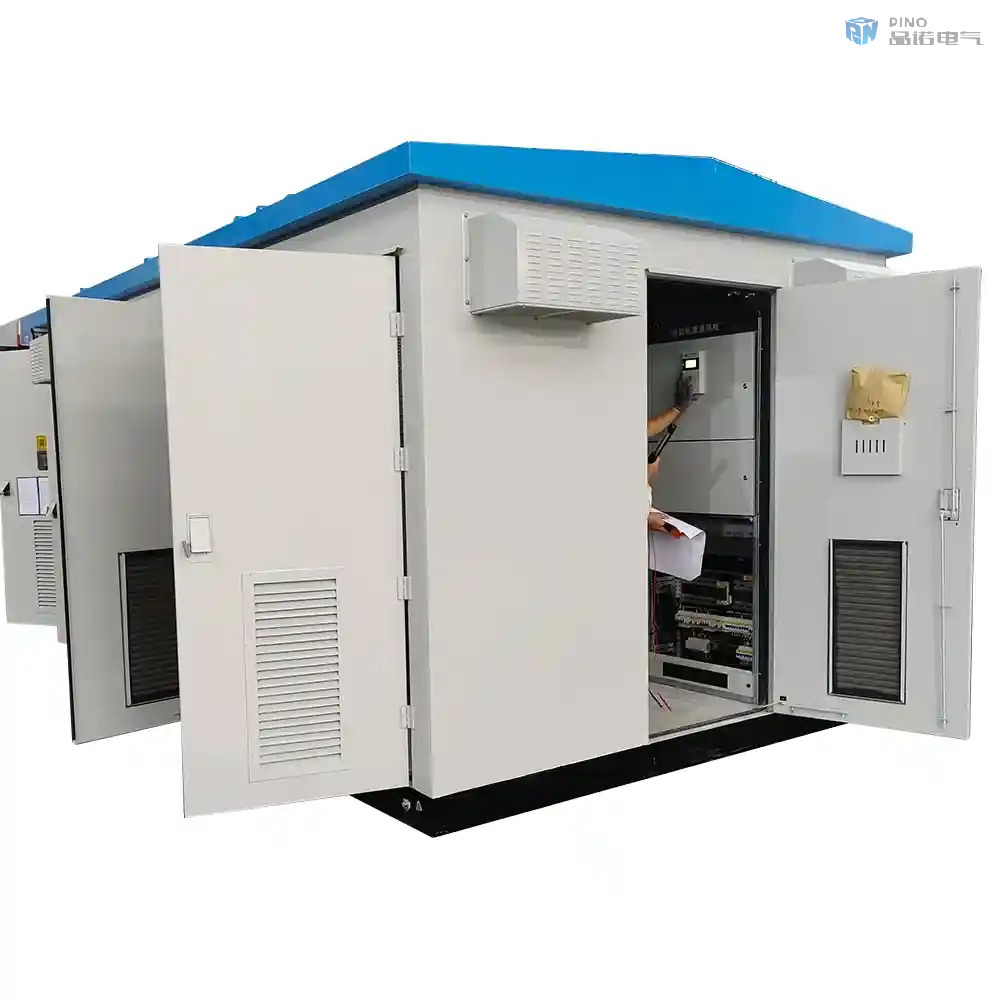
Engineers must first choose between two primary system layouts. Walk-in configurations allow operators to perform routine maintenance indoors. They protect personnel from harsh weather during complex switching operations. However, walk-in units naturally demand a much larger physical footprint. Non-walk-in or compact configurations minimize this overall footprint entirely. Operators perform necessary switching operations from the outside via secure access doors.
Most prefabricated transformer substations contain three distinct, isolated compartments. We separate these zones to manage fault containment safely.
MV Switchgear Compartment: This section houses the primary electrical protection. You typically use Ring Main Units (RMU) or modular switchgear here. Engineers evaluate gas-insulated (GIS) versus air-insulated (AIS) options carefully. GIS offers a much smaller footprint for tight spaces. AIS provides easier maintenance access but requires larger enclosures.
Transformer Room: This central bay houses the core conversion asset. You must decide between oil-immersed and dry-type cast resin transformers. Oil units require specialized spill containment strategies. Dry-type units reduce fire risks significantly but demand superior ventilation systems.
LV Distribution Board: This compartment manages the outgoing downstream power. It houses molded case circuit breakers, digital metering devices, and surge arresters. Smart grid integration components also reside safely within this zone.
Selecting the right enclosure material ensures long-term operational longevity. You must match the physical material to the environmental severity. Coastal areas require extremely high corrosion resistance. Urban underground settings need superior moisture barriers. Steel enclosures provide excellent modularity and lighter transport weights. Pre-cast concrete delivers unmatched vandalism protection and structural integrity. Glass-fiber reinforced polyester (GRP) offers exceptional thermal insulation properties. GRP also completely eliminates surface rust concerns over time.
Table 1: Evaluation of Common Enclosure Materials
Material Type | Structural Durability | Environmental Suitability | Transport Weight |
|---|---|---|---|
Pre-cast Concrete | Extremely high | Ideal for urban and high-vandalism areas | Very Heavy |
Galvanized Steel | Moderate to High | Standard industrial and commercial zones | Medium |
GRP (Glass-fiber) | High | Coastal, corrosive, or high-humidity areas | Lightweight |
High-density equipment inside a tight footprint creates distinct engineering challenges. Confined spaces naturally increase internal ambient temperatures rapidly. If poorly managed, this trapped heat risks severe transformer derating. Equipment loses efficiency when operating above nominal temperature limits. Insulation materials degrade much faster under constant thermal stress.
Specification metrics dictate how we actively handle this excess heat. You must decide between natural and forced ventilation strategies. Natural ventilation uses precision-engineered louvers to create convective airflow. It relies entirely on fundamental thermodynamic principles. Forced ventilation uses active fans to push hot air out mechanically. You must carefully define required IP (Ingress Protection) and IK (Impact Protection) ratings. High IP ratings keep fine dust and moisture out. However, thick filters can severely choke essential airflow. Finding the precise balance prevents premature equipment failure. We recommend incorporating anti-condensation heaters to prevent internal moisture buildup.
Safety always remains the absolute top engineering priority. Compliance baselines ensure reliable operator and public protection. Your chosen design must meet standard IEC 62271-202 criteria. North American projects might require equivalent ANSI/IEEE standard compliance instead. These stringent frameworks validate structural integrity during catastrophic electrical faults.
Protecting personnel demands rigorous internal arc containment. Verifying the internal arc classification (IAC) is strictly mandatory. IAC defines how an enclosure handles explosive fault gases. Proper designs channel these hazardous, superheated gases safely upward or downward. They actively protect operators standing near the doors. A well-designed prefabricated compact substation utilizes dedicated pressure relief flaps. These flaps open instantly during an arc event. They prevent the main enclosure from fracturing under intense pressure.
Modern cities demand highly creative spatial solutions. Urban grids often require specialized, low-profile electrical units. Specifying subterranean or semi-underground models solves extreme space constraints. You can hide these compact units beneath city parks or sidewalks. They remain entirely out of sight from local pedestrians.
Aesthetic and acoustic constraints also play a major role in design. These compact units often sit extremely close to residential zones. Transformers naturally generate constant, low-frequency humming noises. Noise attenuation requirements prevent immediate community noise complaints. Acoustic baffling and vibration isolation pads become essential technical specifications. Some municipalities also demand specific exterior paint finishes. Matching the enclosure color to surrounding architecture aids civic approval.
Site preparation demands extreme accuracy from local contractors. You cannot simply drop a multi-ton unit onto unprepared dirt. The necessity of precise foundation leveling is absolute. Concrete mounting pads must meet strict millimeter tolerance levels. Teams must install pre-laid grounding grids before the unit ever arrives. Correct soil resistivity measurements ensure proper, safe earthing. Poor grounding compromises the entire protection scheme.
Logistics and heavy lifting present another major rollout hurdle. Assessing rural road access prevents delivery day disasters. You must verify mobile crane capacities well in advance. Shipping dimensions often dictate complex highway route planning. A prefabricated substation design is only viable if legally transportable. Over-dimensional loads require expensive police escorts and special municipal permits. Always confirm bridge weight limits along the intended delivery route.
Cable routing requires meticulous, detailed pre-planning. You must coordinate MV and LV cable entry points extremely early. Determine whether your specific site needs bottom or side entry configurations. Avoid on-site structural modifications at all absolute costs. Drilling new access holes randomly often voids manufacturer warranties immediately. It also destroys the certified IP rating of the enclosure. We advise mapping conduit trenches precisely to the vendor’s footprint drawings.
Procurement teams need a structured, objective evaluation approach. Evaluating a vendor's historical track record minimizes future deployment risks. Request detailed case studies of past successful deployments. Look specifically for projects placed in similar environmental conditions. Extreme heat or high coastal humidity quickly reveal underlying design flaws. Ask vendors how their equipment handles local peak summer temperatures.
Factory Acceptance Testing (FAT) remains your best operational safeguard. Comprehensive FAT thoroughly tests the MV/LV integration before shipping. We consider this a strictly mandatory requirement for vendor shortlisting. Fixing minor integration errors in a factory costs very little. Fixing those same errors in the field causes massive schedule delays. You should witness relay trip tests and busbar insulation resistance tests.
Documentation and traceability ensure long-term, stress-free maintainability. Ensure the vendor provides complete single-line diagrams upfront. Demand detailed thermal calculation reports before officially signing off. Comprehensive, localized maintenance manuals must accompany the physical unit. Missing documentation frustrates future maintenance crews.
Your next-step action involves finalizing the Request for Quotation (RFQ). Move from basic technical evaluation to a standardized RFQ process.
Standardize the technical specification sheet across all bidding vendors.
Include specific IP and IK rating demands clearly.
Request itemized pricing for spare parts.
Define warranty terms regarding enclosure corrosion.
This organized approach forces fair, "apples-to-apples" pricing comparisons. It prevents vendors from cutting corners on unseen internal components.
A reliable prefabricated substation design hinges on highly accurate load forecasting. Strict environmental matching ensures the enclosure outlasts its components. Rigorous factory testing prevents cascading failures on the job site. Moving assembly into a controlled environment protects your project timeline. It shields your budget from unpredictable weather and labor shortages.
Prioritize type-tested, strictly IEC-compliant systems over heavily customized one-offs. Standardized systems ensure operational predictability and guarantee an extended service life. Avoid unnecessary aesthetic modifications if they compromise natural ventilation. Maintain clear communication between your civil team and the enclosure manufacturer.
Take control of your next distribution network expansion today. Download our standardized MV/LV Substation Specification Template. You can also contact our specialized engineering team directly for a comprehensive project consultation.
A: Typically 25 to 40 years, depending on enclosure material (concrete vs. metal), environmental conditions, and adherence to maintenance schedules. Regular visual inspections and prompt rust mitigation significantly extend the operational life of metallic units.
A: Yes, while the enclosure footprints are standardized, the internal MV/LV components, relay protection, and smart metering are highly customizable to align with specific utility or industrial requirements. Engineers frequently tailor busbar ratings and breaker types.
A: They utilize precisely engineered ventilation louvers and sometimes forced air (fans) to manage heat dissipation, rigorously tested during the design phase to prevent transformer derating. Anti-condensation heaters also actively maintain stable internal climates.


