


T: +86-180-67981129
E:sales@pino-electric.com
E:sales@pino-electric.com
Makou Industrial Park, Yongxiu County, Jiujiang city, Jiangxi Province, China
Views: 132 Author: Site Editor Publish Time: 2026-08-25 Origin: Site


Project managers and electrical engineers face immense pressure today. They must deploy power infrastructure faster while managing tight budgets. Traditional brick-and-mortar substation construction often falls short. It involves lengthy civil works and suffers from unpredictable weather delays. Sourcing local skilled labor also drives up unexpected costs. A pre-engineered, modular approach solves many of these common industry problems.
We designed this objective, evidence-based guide to help you decide. We will explore whether a modular approach aligns seamlessly with your specific site constraints. You will learn how to hit aggressive project timelines. You will also discover ways to meet strict CAPEX and OPEX targets without sacrificing long-term reliability. We focus entirely on practical applications and realistic trade-offs.
Speed to Deployment: Pre-fabricated units can cut project lead times significantly by allowing concurrent civil works and equipment assembly.
Cost Predictability: Shifts costs from unpredictable on-site labor and construction to fixed-cost factory manufacturing.
Flexibility & Footprint: Ideal for space-constrained sites or transient operations requiring a portable electric substation.
Critical Trade-offs: Requires rigorous upfront logistical planning (crane access, shipping dimensions) and strict thermal management engineering.
Evaluating power infrastructure requires a hard look at financial and operational realities. Engineers must weigh upfront capital expenditures against long-term lifecycle metrics. You must also measure the undeniable value of speed. Traditional construction brings inherent risks. Weather events delay pours. Labor shortages extend timelines. Conversely, modular units arrive tested and ready for integration.
Upfront capital outlays differ vastly between building types. Brick-and-mortar substations require extensive civil engineering. You must secure multiple permits and hire specialized construction crews. Building foundations and walls takes months. These on-site activities expose budgets to severe cost overruns.
In contrast, a container substation offers fixed-cost factory manufacturing. Vendors build the entire unit off-site. This parallel workflow reduces on-site labor hours drastically. Fewer personnel on site also mitigates significant safety liabilities. You avoid expensive accidents and lower your insurance premiums.
Long-term maintenance heavily impacts your budget. Traditional buildings expose equipment to dust, humidity, and pests during construction. Factory-sealed environments protect sensitive electronics far better. These controlled modules reduce routine cleaning requirements. They also extend the lifespan of internal breakers and relays.
Relocatability provides another major financial advantage. Temporary projects like mining or civil construction eventually end. You cannot move a concrete building. However, you can load a modular unit onto a truck. Deploying it to a new site recovers massive amounts of capital.
Speed is often the most critical project metric. Traditional builds follow a linear timeline. You cannot install equipment until the building finishes. Modular construction changes this paradigm entirely. Civil teams pour simple concrete pads on site. Simultaneously, engineers assemble the electrical components in a factory.
This "plug-and-play" deployment model slashes project lead times. Manufacturers conduct comprehensive Factory Acceptance Testing (FAT) before delivery. They verify relay logic, wiring, and insulation integrity off-site. Once the unit arrives, teams simply connect the external cables. This process generates return on investment much faster.
Table: Construction Approach Comparison
Feature | Traditional Substation | Modular/Containerized Substation |
|---|---|---|
Civil Works | Extensive (foundations, walls, roofs) | Minimal (concrete pad or piers) |
Labor Costs | High (unpredictable field labor) | Low (fixed factory labor) |
Testing Phase | Conducted sequentially on-site | Pre-tested via FAT in factory |
Relocatability | Impossible | Highly feasible |
A standard ISO shipping container provides a rigid, weather-proof shell. However, converting it into a safe electrical housing requires immense engineering. Manufacturers must optimize every cubic inch. They balance high-voltage spacing rules against physical dimensional limits. Understanding these internal systems helps you write better equipment specifications.
Spatial optimization defines a modern switchgear container. Engineers arrange medium and low voltage compartments carefully. They ensure adequate clearance for safe operation. Operators must access breaker panels easily. Compartmentalization isolates faults to prevent catastrophic widespread damage. Custom busbar routing helps maximize the limited internal footprint.
Selecting the right transformer impacts safety and layout. Dry-type transformers dominate modular enclosures. They eliminate oil leak risks and reduce fire hazards. They also require less maintenance.
Some high-capacity applications still demand oil-filled transformers. Using oil inside a container requires strict spill containment engineering. Manufacturers weld bunds into the floor. They also install advanced fire suppression systems to manage the increased thermal risk.
Operating systems keep the primary equipment alive. HVAC units provide critical thermal management. They prevent heat buildup from destroying sensitive electronics. Fire suppression systems detect smoke and deploy clean agents instantly. Access control systems secure the doors against unauthorized entry. SCADA monitoring relays real-time data back to your central control room.
Standard shipping containers cannot safely house high-voltage gear. Vendors modify them heavily to meet electrical standards. They cut doors and weld structural reinforcements around openings. They install thick thermal insulation to manage external climate extremes. Acoustic dampening materials reduce transformer hum. Finally, heavy-duty marine paint prevents rust in corrosive environments.
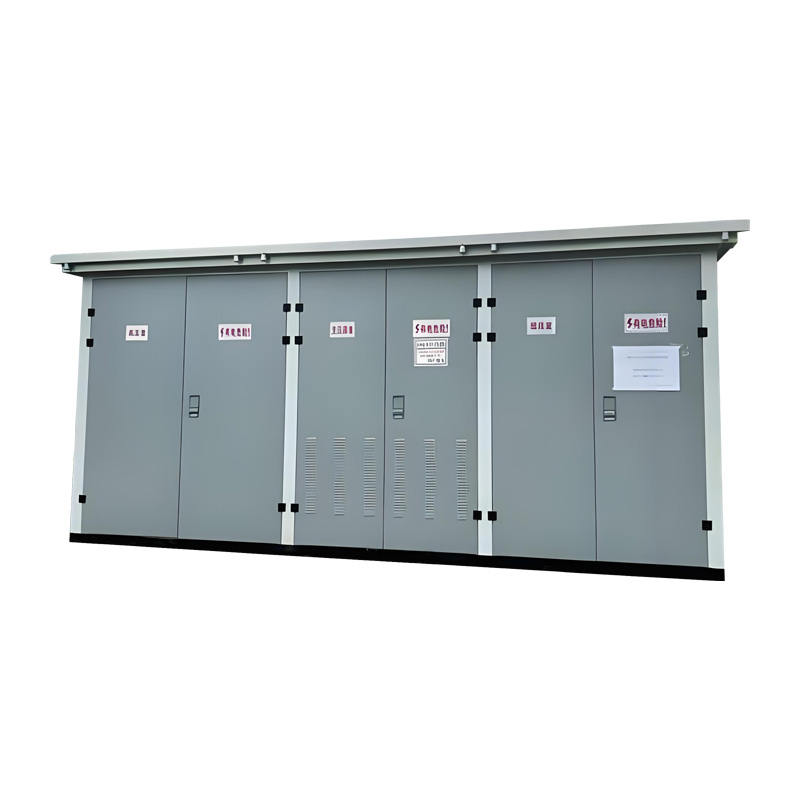
Modular infrastructure solves specific geographical and operational challenges. Traditional builds fail when timelines shrink or sites lack basic resources. Identifying your primary project constraints clarifies your decision. We see four distinct scenarios where modular deployment drastically outperforms traditional construction.
Solar farms and wind turbine projects run on aggressive timelines. Power purchase agreements impose strict grid connection deadlines. Missing these deadlines triggers severe financial penalties. Rapid deployment makes modular units ideal for renewables. Developers drop them onto simple foundations, connect the arrays, and start generating revenue.
Mining operations often exist in brutal climates. Oil and gas fields span isolated deserts or freezing tundras. Sourcing local skilled construction labor proves incredibly cost-prohibitive. A portable electric substation bypasses this issue entirely. Vendors build it in a comfortable facility. You transport the finished product directly to the wilderness.
Pharmaceutical (Pharma) and Food & Beverage (F&B) sectors require extreme cleanliness. They cannot tolerate dust from masonry construction. Urban facilities also lack physical space for expansion. Placing a modular unit on a roof or adjacent parking lot solves space issues. It allows rapid facility expansion without disrupting ongoing, profitable production lines.
Hurricanes, wildfires, and floods destroy established infrastructure quickly. Communities need power restored in days, not months. Utilities deploy mobile units to bypass damaged grid sections. These modular units act as vital lifelines. They restore critical services to hospitals and neighborhoods while teams rebuild permanent structures.
Selecting the right modular solution demands rigorous technical evaluation. You cannot treat these units as simple commodities. Poorly specified enclosures lead to overheating, compliance failures, or safety incidents. We recommend following a structured four-step evaluation framework.
Evaluate Voltage and Capacity Requirements: You must match your load demands with physical space limits. High voltages require larger air clearances. A 10ft container suits basic distribution. A 20ft unit handles standard industrial loads. Massive mining operations often require custom 40ft setups.
Determine Environmental Ratings (IP/NEMA): Geography dictates your required ingress protection. Desert sites need high protection against fine sand. Coastal sites need defense against salt spray. Select the right IP or NEMA rating. Ensure the enclosure seals properly against local weather extremes.
Assess Thermal Management Engineering: High-load scenarios generate massive heat. Evaluate the manufacturer's HVAC design meticulously. If HVAC fails, internal temperatures skyrocket. This causes equipment derating or catastrophic failure. Redundant cooling systems offer excellent insurance.
Verify Compliance and Certifications: Individual breakers might meet standards. However, the entire integrated assembly must pass inspection. Ensure the complete enclosure complies with regional codes. Look for IEC, ANSI/IEEE, and specific local grid code certifications before purchasing.
Chart: Container Dimensions vs Application Scale
Container Size | Typical Voltage Range | Primary Application Context |
|---|---|---|
10-foot ISO | Up to 11kV | Small commercial, auxiliary power |
20-foot ISO | 11kV - 33kV | Renewable energy, mid-sized industrial |
40-foot ISO | 33kV - 132kV | Heavy mining, utility-scale integration |
Demand a detailed thermal flow analysis from your vendor before signing off.
Review the FAT protocols to ensure they mimic your specific site conditions.
Check the structural steel gauge used; standard shipping containers are often too thin.
Modular deployment looks flawless on paper. Real-world execution presents unique friction points. Engineering teams must acknowledge these realities early. Ignoring logistical or environmental challenges turns a fast deployment into a costly nightmare. We highlight the most common hurdles you will face.
A fully loaded containerized electrical substation is incredibly heavy. Transporting oversized loads to remote sites requires specialized haulers. You must audit the entire delivery route. Bridge weight limits often force massive detours. Low overpasses snag tall enclosures. Congested urban sites complicate crane access. Rigorous upfront logistical planning prevents delivery day disasters.
Plug-and-play still requires a solid foundation. You must execute precise site preparation. Civil teams must pour level concrete pads or install deep piers. They must dig cable trenching accurately to align with the unit's entry glands. You must also install a robust grounding grid. Improper grounding risks human lives and equipment integrity.
Extreme climates punish metal enclosures. Rapid temperature swings cause internal condensation. Water droplets forming on high-voltage busbars lead to deadly arc flashes. Improper insulation exacerbates this risk. If HVAC units fail in high-heat environments, internal components melt. You must prioritize redundant cooling and anti-condensation heaters.
Modular units offer massive upfront customization. You dictate the exact layout before manufacturing begins. However, post-installation structural modifications prove inherently difficult. You cannot easily knock down a steel wall to add another breaker panel. Upgrading requires buying a supplementary module. You must accept this physical scalability limit.
Deploying power infrastructure demands smart financial and technical compromises. The decision matrix is clear. Choose modular enclosures when you prioritize speed, face harsh environments, or lack physical space. They drastically reduce site labor and provide predictable fixed costs. Conversely, stick to traditional brick-and-mortar builds if you require infinite scalability or ultra-high voltage open-air layouts.
Your next step requires objective analysis, not guesswork. Conduct a thorough site audit immediately. Measure your physical footprint and map out crane access routes. Next, run a comparative CAPEX and operational cost model against a traditional build. Once the data confirms the modular advantage, initiate a detailed RFQ process with certified manufacturers.
A: These units typically last 20 to 30 years. This lifespan matches traditional substations, provided you perform proper structural maintenance. You must regularly service the HVAC units, replace air filters, and touch up marine-grade exterior paint to prevent rust in harsh environments.
A: Yes. While many vendors use modified ISO shipping containers for ease of transport, manufacturers also build purpose-built enclosures. These custom units accommodate oversized gear, unique layouts, or specialized skid mounts, though they may require special oversize load permits during shipping.
A: Manufacturers perform a Factory Acceptance Test (FAT) off-site. They simulate loads, test relay logic, and verify wiring inside a controlled facility. This rigorous process minimizes Site Acceptance Test (SAT) risks, ensuring the unit functions perfectly the moment it connects to the grid.
A: Yes. They feature heavy-gauge steel construction designed to withstand forced entry. Vendors install concealed hinges, multi-point locking mechanisms, and tamper-proof vents. Many units also integrate advanced security systems, including biometric access controls and live SCADA alarms, to protect critical infrastructure.


