


T: +86-180-67981129
E:sales@pino-electric.com
E:sales@pino-electric.com
Makou Industrial Park, Yongxiu County, Jiujiang city, Jiangxi Province, China
Views: 168 Author: Site Editor Publish Time: 2026-08-13 Origin: Site


Traditional "stick-built" electrical infrastructure often suffers from unpredictable timelines. Skilled labor costs run exceptionally high. Weather delays complicate on-site construction immensely. Conversely, modular solutions offer controlled, factory-tested reliability. They strip away many uncertainties facing project developers today. Engineering, Procurement, and Construction (EPC) firms rely heavily on these standardized units. Facility managers and utility planners also benefit immensely. Why? Because these systems drastically reduce site risk. They accelerate commissioning schedules. They guarantee verifiable compliance before the equipment arrives on site. This article serves as a technical and commercial evaluation guide. We will explore how you can standardize power distribution using modular systems. You will learn about core components, design variations, and implementation realities. Ultimately, you will discover how shifting to a modular approach streamlines your entire electrical deployment strategy.
A prefabricated electrical substation consolidates transformers, switchgear, and controls into a single, factory-assembled enclosure, reducing on-site civil works by up to 50%.
System configurations typically range from medium voltage (MV) to low voltage (LV) applications, strictly adhering to IEC, IEEE, or local grid standards prior to shipment.
Factory Acceptance Testing (FAT) is the critical de-risking mechanism, ensuring the unit is functionally verified before reaching the project site.
Traditional substations carry compounding risks. Project developers face constant hurdles during conventional construction. Weather delays routinely stall outdoor schedules. Rain and freezing temperatures halt civil works completely. Furthermore, multi-vendor coordination creates severe logistical headaches. You might buy transformers from one vendor. You might source switchgear from another. Integrating these mismatched components on site causes friction. Skilled labor shortages further strain project timelines. Finding qualified high-voltage electricians proves increasingly difficult. Complex site integration often leads to massive budget overruns.
Enter the modular approach. A prefabricated substation acts as an engineered-to-order, plug-and-play asset. Factories assemble the entire unit off-site in a controlled environment. Technicians integrate all internal components before shipping. This method transforms a chaotic construction project into a streamlined product delivery. You receive a fully enclosed, pre-wired system ready for rapid deployment.
You must evaluate the complete financial picture carefully. Initial equipment costs for modular units might seem higher upfront. However, you must look beyond the initial capital expenditure (Capex). Reductions in labor, civil engineering, and commissioning time generate massive operational savings (Opex). You avoid expensive on-site troubleshooting. Ultimately, you achieve a significantly lower total installed cost.
Risk mitigation presents another major financial benefit. You gain single-vendor liability. Consolidated warranty management simplifies your ongoing operations. If a component fails, you only call one manufacturer. You eliminate finger-pointing between different equipment suppliers.
Material selection depends heavily on environmental extremes. Manufacturers typically use galvanized steel, marine-grade aluminum, or specialized coatings. These materials actively combat harsh coastal corrosion. They withstand seismic activity and extreme thermal loading. Safety features remain absolutely paramount in enclosure design. Arc-fault containment mechanisms protect operators during catastrophic failures. Internal compartmentalization isolates electrical faults effectively. It prevents a localized issue from destroying the entire unit. High IP and NEMA ingress protection ratings keep dust out. They also block moisture intrusion in severe climates.
The internal architecture follows a strict, highly organized topology.
High/Medium Voltage Compartment: This section houses vital incoming power equipment. It contains robust medium-voltage switchgear. You will find load break switches and vacuum circuit breakers here. These components safely interrupt fault currents.
Transformer Compartment: You can choose dry-type or oil-immersed transformers. Dry-type units minimize fire risks in commercial buildings. Oil-immersed units offer superior cooling for heavy industrial loads. Your choice dictates specific fire safety and ventilation methods.
Low Voltage & Control Compartment: This section distributes power to your end loads. You will find low-voltage distribution panels here. IoT-enabled metering provides real-time energy consumption data. SCADA integration allows facility managers to monitor systems remotely. Protective relays ensure grid stability and isolate downstream faults rapidly.
Designers must balance spatial constraints very carefully. Shrinking the physical footprint cannot compromise thermal dissipation. Heat destroys electrical components quickly. Routine maintenance clearances must also remain easily accessible. Industry standards dictate specific safe working distances for operators. Expert engineers rigorously simulate internal airflow. They use advanced thermal modeling software. This ensures transformers stay perfectly cool under peak operational loads. You cannot ignore thermal dynamics when designing compact enclosures.
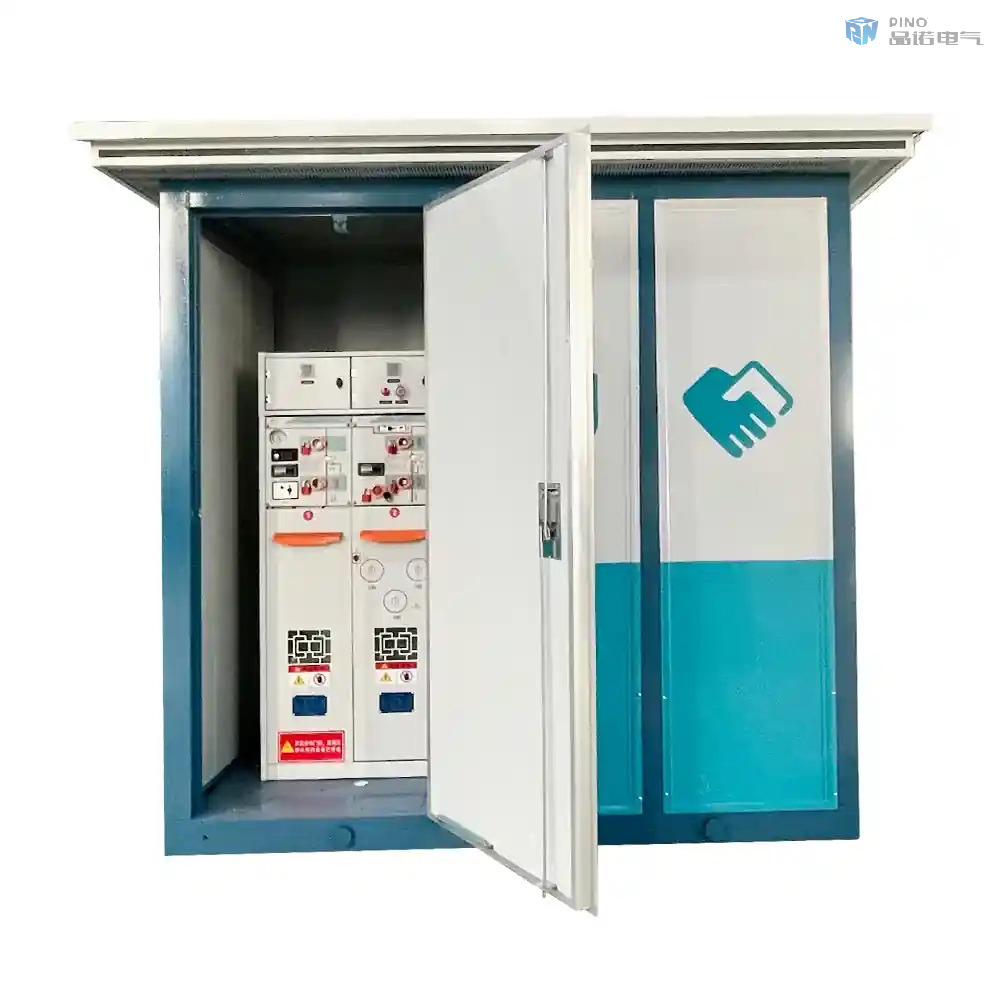
These units are best for urban environments. They fit perfectly in commercial complexes and space-constrained sites. Characteristics include extreme component integration. They feature a remarkably smaller footprint. Operators usually manage the equipment internally. They walk into the enclosure to perform routine maintenance. This design saves valuable real estate in dense city centers.
These units serve industrial parks and renewable energy sites well. They also handle residential underground distribution efficiently. Characteristics include distinct front accessibility. They feature clearly separated modular sections. They typically maintain a much lower physical profile. Technicians operate the equipment from the outside. The low profile blends easily into residential landscaping.
These units are best for mining and temporary grid support. They provide excellent disaster recovery power solutions. Characteristics involve ruggedized, heavy-duty base frames. Engineers design them for frequent physical relocation. They allow rapid interconnection to temporary power sources. You can drag them across rough terrain without damaging internal components.
How do you choose the right archetype? You must map your specific site footprint accurately. Identify your exact voltage step-down requirements. Consider local aesthetic constraints or stringent zoning restrictions. Match these specific factors to the right structural design.
Table 1: Substation Archetype Evaluation Framework
Archetype | Best Application | Footprint & Profile | Operation Style |
|---|---|---|---|
Compact / Kiosk | Urban, Commercial | Small footprint, taller profile | Internal walk-in access |
Pad-Mounted | Industrial, Residential | Wider footprint, low profile | External front access |
Mobile / Skid | Mining, Emergency Grid | Variable, ruggedized base | External rapid connect |
Scalability is absolutely crucial in renewable energy generation. Prefabricated substations enable the rapid scaling of renewable assets. They streamline complex inverter-to-grid connections flawlessly. Developers can energize massive solar farms in predictable phases. You simply drop another modular unit onto a prepared pad. This plug-and-play capability prevents grid bottlenecking during peak construction seasons.
System uptime dictates success in the data center industry. These facilities require highly standardized electrical topologies. They demand strict redundancy levels. Aggressive speed-to-market deployments demand modular power blocks. You cannot wait months for traditional substation construction. Modular units guarantee identical builds across multiple global sites. This standardization drastically reduces human error during emergency maintenance.
Harsh industrial conditions easily destroy standard commercial equipment. Mining operations generate extreme dust and intense physical vibration. Modular units offer rugged durability against these harsh elements. Furthermore, you can upgrade or relocate power distribution easily. As operational footprints expand, your power supply moves accordingly. A skid-mounted prefab substation tracks directly with the active mining face.
We advise buyers to evaluate return on investment carefully. Do not measure ROI through standalone equipment costs alone. Instead, focus entirely on "Time-to-Energization" (TTE). Rapid TTE accelerates your overall revenue generation timeline. Every single week saved on construction yields direct financial returns. A facility that powers up two months early generates two extra months of profit.
Modular does not mean zero site preparation. Civil works are still absolutely necessary. You must pour level concrete pads. Grounding grids require proper deep trenching. These foundational elements must align precisely with vendor drawings. Even minor measurement deviations cause major installation delays. If conduit stub-ups miss the enclosure cutouts, you lose days adjusting them. Proper site preparation requires rigorous quality control.
Shipping heavy, oversized loads poses significant logistical challenges. You must proactively manage transport risks. Consider these critical logistical factors:
Oversized enclosures require specialized crane rigging plans for safe lifting.
Road transport permits take weeks to secure from local transportation authorities.
Route height limits dictate the maximum allowable enclosure sizes for highway travel.
Delivery routes require thorough surveys to avoid low bridges or power lines.
Failing to plan freight logistics halts the entire project instantly.
Factory Acceptance Testing remains strictly non-negotiable. FAT proves the system works flawlessly before it ships. Technicians perform dielectric tests and functional switching sequences. You must verify regional regulatory compliance early in the design phase. Standards like UL, CSA, or CE vary drastically by location. Catching compliance issues late causes catastrophic commissioning failures. A failed local inspection renders the equipment useless until modified.
You must ask manufacturers highly targeted technical questions. Demand transparent communication regarding supply chain bottlenecks. We strongly recommend using the following criteria to evaluate partners:
Ask them to provide detailed arc-flash calculation reports for safety verification.
Inquire about exact lead times for standard versus custom enclosures.
Request access to their specific ISO quality control certifications.
Evaluate their past project case studies in your specific industry sector.
A reliable vendor acts as an engineering partner, not just a metal fabricator.
A modular power approach fundamentally shifts project risk. It moves uncertainty from the unpredictable construction site to the controlled factory floor. This shift guarantees superior build quality. It also vastly accelerates your final commissioning schedule. These systems offer unparalleled flexibility for modern infrastructure demands.
Decision-makers should take immediate, concrete action. Start by compiling your current single-line electrical diagrams. Gather your comprehensive site environmental data today. Clearly define your specific load requirements and redundancy needs. Then, initiate a technical feasibility discussion with a qualified application engineer. Proactive planning ensures a seamless transition to modular power distribution.
A: The main difference lies in assembly location and methodology. A conventional substation requires extensive on-site component integration. Builders construct it piece by piece outdoors. A prefabricated electrical substation undergoes complete factory assembly. Technicians test the entire integrated unit before shipping. This significantly reduces site labor and weather-related construction delays.
A: Manufacturing typically requires a 12 to 24-week lead time. This timeframe depends heavily on customization and component availability. However, on-site installation only takes days or a few weeks. Civil works occur simultaneously with factory production, which dramatically accelerates the overall project schedule.
A: Yes, they are highly configurable. "Prefabricated" does not mean a rigid, off-the-shelf product. Engineers customize these units to meet your precise electrical specifications. You can easily specify preferred switchgear brands, transformer ratings, and complex SCADA setups. The enclosure adapts fully to your specific operational topology.
A: With proper routine maintenance, they match traditional substation lifespans perfectly. You can expect a reliable service life of 25 to 30 years or more. Durable enclosure designs and climate-controlled interior compartments protect sensitive internal components from harsh environmental degradation.


