


T: +86-180-67981129
E:sales@pino-electric.com
Makou Industrial Park, Yongxiu County, Jiujiang city, Jiangxi Province, China
Views: 0 Author: Site Editor Publish Time: 2026-11-28 Origin: Site


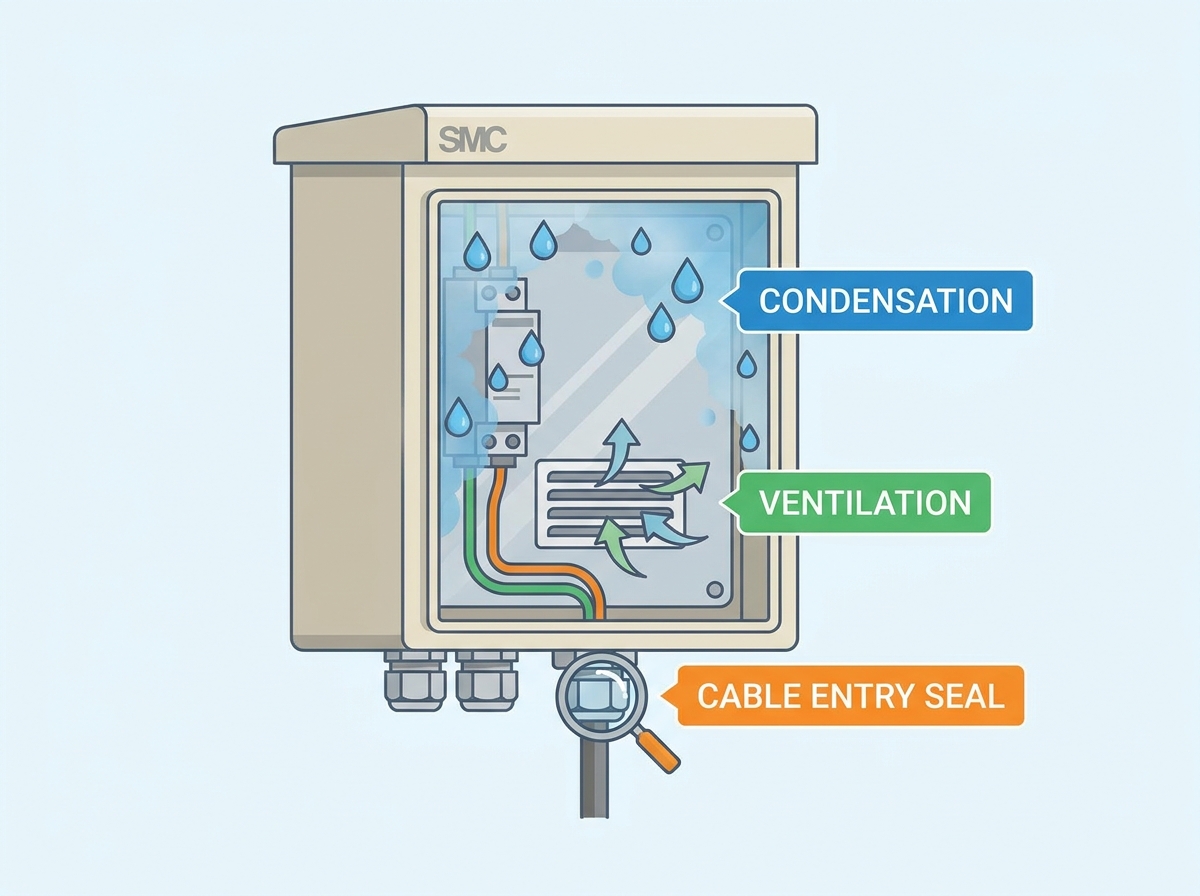
Moisture-induced component failure remains the leading cause of downtime in outdoor electrical installations. This operational reality persists despite engineers specifying equipment with high IP or NEMA ratings. The core problem stems directly from temperature volatility in outdoor environments. Rapid temperature drops below the dew point create unavoidable internal moisture. Fiberglass-reinforced plastics present unique thermal dynamics that complicate this issue. Mitigating SMC electrical enclosure condensation requires a holistic approach. You must move beyond basic material selection. Success demands rigorous ventilation planning and precise cable entry execution. Pre-fabrication design and proactive environmental controls form the foundation of a reliable installation. Ignoring these factors guarantees premature equipment failure and emergency maintenance.
Material Dynamics: SMC (Sheet Molding Compound) offers superior corrosion resistance and insulation compared to metal, but its thermal properties require specific condensation management strategies.
Pre-Fabrication Planning: Designing cable entries and ventilation layouts prior to fabrication prevents field-modification errors that frequently compromise enclosure integrity.
The Conduit Vulnerability: Unsealed conduits act as moisture funnels and are the most common installation error leading to internal condensation.
Ventilation vs. Protection: Effective moisture control demands a calculated trade-off between allowing internal airflow and maintaining the required ingress protection (IP) rating.
Proactive Cable Management: Proper cable gland design and bottom-entry routing are non-negotiable baseline requirements for long-term outdoor enclosure reliability.
Condensation follows strict physical rules. Warm air holds significantly more moisture than cold air. In an outdoor setting, moisture-laden air gets trapped inside the enclosure during the day. When night falls, external temperatures drop rapidly. The enclosure walls cool down in response to the ambient air. The trapped internal air contacts these cooled interior surfaces. If the surface temperature falls below the dew point, the air can no longer hold its moisture. Water vapor transforms into liquid droplets directly on sensitive components, busbars, and terminal blocks.
Solar loading during the day exacerbates this moisture cycle. Direct sunlight heats the enclosure exterior, raising internal temperatures well above ambient levels. This thermal expansion increases the air's capacity to absorb humidity from any available source, including micro-leaks around door seals or unsealed conduits. When the inevitable evening temperature drop occurs, the volume of water ready to condense is much higher. Understanding this diurnal temperature cycle helps you anticipate moisture loads and design appropriate countermeasures for your electrical infrastructure.
Material selection fundamentally alters how heat transfers through an enclosure wall. An SMC electrical enclosure provides excellent thermal insulation compared to traditional stainless steel or aluminum. Metal enclosures possess high thermal conductivity. They transfer heat quickly, meaning the internal surface temperature matches the external ambient temperature almost instantly. This rapid transfer causes immediate condensation on metal walls as soon as the outside air cools.
SMC has a much lower thermal conductivity. This property slows down temperature transfer significantly. The slower thermal response delays the onset of condensation during evening temperature drops, providing a buffer against sudden weather changes. However, this same insulating property traps internal heat generated by active components like variable frequency drives, transformers, or power supplies. You must actively manage this trapped heat. Failing to do so creates localized high-humidity pockets that eventually condense when the equipment powers down or the external temperature drops severely.
Material Type | Thermal Conductivity (W/mK) | Condensation Risk Profile | Internal Heat Retention |
|---|---|---|---|
SMC (Fiberglass) | ~0.3 | Delayed onset; requires trapped moisture to reach dew point. | High. Traps heat from internal components effectively. |
Carbon Steel | ~45.0 | Rapid onset; walls cool instantly with ambient drops. | Low. Dissipates internal heat quickly. |
Aluminum | ~200.0 | Extreme rapid onset; highly susceptible to flash condensation. | Very Low. Acts as a natural heat sink. |
Physical design forms the absolute first line of defense against moisture. Sloped roofs are mandatory for outdoor installations. They prevent standing water from accumulating on top of the cabinet. Integrated rain hoods direct moisture away from vulnerable areas. These physical barriers protect ventilation ports, door seams, and gasket interfaces from direct rain exposure. Water pooling on flat surfaces eventually finds a way inside through capillary action or seal degradation. A well-designed SMC distribution cabinet utilizes specific geometry to shed water naturally, reducing the hydrostatic pressure on the enclosure's seals.
Beyond sloped roofs, drip lips around the door frame prevent water from rolling inside when a technician opens the cabinet during a rainstorm. These mechanical design elements cost nothing in ongoing maintenance but provide decades of reliable water diversion. You should verify these geometric features on the manufacturer's submittal drawings before approving any outdoor enclosure.
Airflow prevents moisture buildup by equalizing internal and external humidity levels. Passive ventilation relies entirely on natural convection. You utilize breather valves, louvers, and strategically placed vents to let air circulate. This approach works best for installations with low internal heat loads and relatively stable ambient humidity. It requires no power and involves no moving parts, making it ideal for remote solar sites or basic junction boxes.
Active ventilation utilizes filter fans or forced air systems. High-density electronic installations require active cooling to survive outdoors. Fans push hot, humid air out of the enclosure before it has the opportunity to condense. Active systems provide superior climate control but introduce maintenance requirements. You must schedule routine filter replacements and fan inspections to ensure the system does not fail and leave the cabinet vulnerable to rapid overheating and subsequent condensation.
Ventilation creates a distinct engineering conflict. You need airflow for moisture control. Simultaneously, you need strict IP54/IP66 or NEMA 3R/4X ratings to block dust and rain. Standard open louvers immediately compromise ingress protection. The modern solution involves hydrophobic membranes and specialized breather plugs. These engineered components allow vapor equalization without permitting liquid ingress.
Hydrophobic breathers utilize expanded PTFE materials. The microscopic pores in the membrane are large enough to let water vapor molecules pass through, but too small for liquid water droplets to penetrate. They let the enclosure breathe while maintaining a watertight seal. Specifying the correct membrane size ensures adequate airflow without sacrificing the enclosure's environmental rating. For larger cabinets, you may need multiple breathers installed diagonally across from each other to promote cross-ventilation.
Ventilation alone cannot solve every moisture problem. You must specify internal heating systems when ambient temperatures consistently drop below the dew point. Heaters keep the internal air temperature slightly above the external temperature. This thermal elevation prevents moisture from forming on surfaces. Positive Temperature Coefficient (PTC) heaters are the industry standard because they self-regulate their heat output based on the surrounding air temperature, preventing accidental damage to nearby plastic components.
Sizing the heater requires a strict calculation framework. You must determine the required wattage based on the total enclosure volume and environmental factors. Follow these steps for accurate sizing:
Calculate the total exposed surface area of the enclosure in square meters.
Determine the maximum expected temperature differential (Delta T) between the desired internal temperature and the lowest external ambient temperature.
Identify the thermal transmission coefficient of the SMC material (typically around 3.5 W/m²K for standard thicknesses).
Multiply the surface area by the Delta T and the transmission coefficient to find the baseline wattage required.
Add a 20% safety margin to account for wind chill and extreme weather anomalies.
Position heaters near the bottom of the enclosure. Heat rises naturally. Placing the heater low allows natural convection to distribute the warm air evenly across all internal components, eliminating cold spots where condensation might otherwise form.
You must plan your enclosure cable entries long before fabrication begins. Field modifications introduce severe, often irreversible risks to the enclosure's integrity. Drilling or punching holes into SMC materials on-site can expose the internal fiberglass matrix. Rough drilling creates micro-cracks radiating outward from the hole. These cracks spread over time due to thermal cycling and permanently compromise the enclosure's IP rating. Exposed glass fibers also wick moisture directly into the composite material.
Factory-machined cutouts ensure clean edges, exact dimensions, and sealed composite layers. Pre-planning eliminates the need for risky field alterations. It forces the engineering team to finalize cable routing, gland sizing, and conduit paths during the design phase. This upfront work results in a significantly more reliable final installation. If field drilling is absolutely unavoidable, technicians must use specialized hole saws designed for fiberglass and immediately seal the exposed cut edges with an approved resin or polyurethane sealant.
Engineering consensus dictates that bottom cable entry is the only acceptable standard for outdoor installations. Bottom entry physically prevents gravity-fed water ingress. Water naturally flows downward. Top and side entries force you to fight gravity constantly. They rely heavily on perfect, degradation-free seals to keep water out.
If a top seal degrades from UV exposure, thermal expansion, or chemical attack, water channels directly into the enclosure and onto live components. Bottom entry provides a mechanical fail-safe against seal degradation. Even if a bottom gland seal fails completely, water cannot flow upward into the cabinet. You should only permit side entries under exceptional circumstances, and top entries should be strictly prohibited in outdoor specifications. When side entries are used, cables must feature a "drip loop" outside the enclosure to force water to fall away from the entry point.
Proper cable gland design ensures long-term environmental reliability. You must match the gland material to the enclosure to prevent galvanic corrosion or differential thermal expansion. High-grade nylon or nickel-plated brass glands work exceptionally well with SMC enclosures. Nylon glands offer excellent UV resistance and will not corrode in coastal environments.
Exact knockout sizing is critical for seal continuity. A hole that is even slightly too large prevents the gland's O-ring or gasket from seating properly against the enclosure wall. Use multi-hole glands for routing several small control cables through a single port. This maintains seal continuity much better than clustering many individual entries too close together. Grouping individual holes too tightly weakens the structural integrity of the gland plate and complicates wrench access during installation, often leading to under-tightened seals.
Unsealed conduits destroy the integrity of even the most perfectly designed enclosure. They create a powerful "chimney effect." Underground or long-run conduits transport warm, humid air directly into the base of the cabinet. The ground temperature often differs significantly from the ambient air temperature above ground. A conduit buried three feet deep might sit at a stable 55°F, while the air above ground drops to 30°F at night.
This temperature differential forces rapid condensation inside the cabinet. The conduit acts as a direct pipeline for moisture, completely bypassing all external weather seals, rain hoods, and hydrophobic breathers. Humid air travels up the conduit, hits the cooler interior of the enclosure, and deposits water directly onto the terminal blocks. This is the single most common cause of mysterious water pooling in supposedly sealed outdoor cabinets. Technicians often blame the door gasket, completely missing the open pipe feeding moisture from below.
You must block this moisture pipeline at the point of entry. Use duct sealing putty or expanding foam specifically rated for electrical use. Pack the sealant deeply into the conduit, ensuring it surrounds every individual wire. Do not just smear putty over the top of the opening. The seal must be airtight to stop the convective flow of humid air.
Mechanical conduit seals provide even better protection. These seals use compressed rubber grommets to lock out air and moisture permanently. Additionally, you must install conduit drain points at the lowest elevation outside the enclosure. These drains redirect accumulated water out of the conduit before it can travel upward into the cabinet. Proper drainage prevents the conduit from filling with water and creating hydrostatic pressure against the enclosure entry point. A simple T-fitting with a weep hole at the lowest point of the conduit run effectively manages this risk.
Implement a mandatory installer checklist prior to commissioning the equipment. Verify all seals, ports, and doors for leaks. Unsealed conduits and poorly seated gaskets cause the vast majority of outdoor electrical box condensation issues. Do not assume the installation crew followed the sealing protocols perfectly.
A simple visual inspection identifies missing gland nuts, forgotten conduit putty, or pinched door gaskets. Installers often remove breather plugs during wiring and forget to reinstall them. Catching these human errors during the installation phase prevents catastrophic short circuits weeks later. Require photographic evidence of sealed conduits as part of the final project sign-off. This accountability ensures the physical installation matches the engineering specifications.
Different outdoor environments require vastly different enclosure specifications. You cannot use a one-size-fits-all approach. You must map specific environmental threats directly to the enclosure features to ensure long-term reliability.
High Humidity Environments: Demand oversized breather plugs and active ventilation to maintain continuous air exchange.
Coastal Salt Environments: Require non-metallic hinges, composite hardware, and specialized nylon gland types to prevent rapid corrosion.
Extreme Diurnal Temperature Shifts: Necessitate thermostatically controlled PTC heaters to combat rapid dew point transitions at sunset.
High Traffic Public Areas: Require high IK ratings for impact resistance and anti-tampering hardware alongside robust climate control.
Heavy Rainfall Zones: Demand extended rain canopies, sloped roofs, and strict adherence to bottom-only cable entry protocols.
Balancing moisture control with these secondary outdoor threats ensures the enclosure survives both the weather and its immediate physical surroundings. Document these requirements clearly in your procurement specifications.
Evaluate the maintenance implications of your climate control choices during the specification phase. Advanced climate control systems and premium cable glands require a higher initial setup effort and careful engineering. However, this upfront diligence prevents the severe operational disruption of replacing moisture-damaged switchgear or telemetry equipment later.
Active ventilation systems require ongoing maintenance. You must schedule regular filter replacements and fan operational checks. If a fan fails, the enclosure will rapidly overheat or fill with condensation. Properly sealed passive systems, combined with anti-condensation heaters, offer a more reliable "install and forget" approach. Choose the strategy that aligns with your available maintenance resources, site accessibility, and the criticality of the housed equipment. Remote sites benefit heavily from passive systems, while easily accessible industrial yards can support the maintenance needs of active cooling.
Preventing outdoor electrical box condensation goes far beyond simply buying a highly-rated box. It requires active thermal management, precise pre-fabrication planning, and flawless installation execution. You must approve SMC enclosure designs based on verified bottom-entry cable plans, appropriate breather sizing, and mandatory conduit sealing protocols. Relying on IP ratings alone guarantees failure in volatile outdoor environments. Take immediate action to secure your infrastructure.
Audit your current outdoor enclosure specifications to ensure they mandate proper hydrophobic ventilation and bottom-entry drainage.
Consult with thermal management engineers to calculate precise heater sizing for your specific regional climate and enclosure volume.
Update installer standard operating procedures to require strict conduit sealing with approved electrical putty or mechanical seals.
Implement rigorous post-installation leak checks and visual audits, requiring photographic proof of sealed conduits before final equipment commissioning.
A: IP ratings measure protection against solid objects and external liquid ingress, like rain or hose-directed water. They do not account for internal vapor. When ambient temperatures drop rapidly, the air inside the enclosure cools and loses its capacity to hold moisture. This water vapor condenses into liquid on internal surfaces. An IP66 rating actually traps this moisture inside, making proper ventilation and thermal management necessary to prevent component damage.
A: You stop condensation by managing internal humidity and temperature. Install thermostatically controlled anti-condensation heaters to keep internal temperatures above the dew point. Utilize hydrophobic breather valves to allow moisture vapor to escape without letting rain in. Ensure the enclosure features a sloped roof to shed water, and strictly seal all incoming conduits with electrical putty to block humid air from entering the base.
A: SMC provides superior thermal insulation compared to stainless steel. This slower thermal transfer delays the onset of condensation when external temperatures drop. However, SMC's insulating properties also trap heat generated by internal components. While SMC is highly resistant to corrosion and slows temperature swings, neither material prevents condensation entirely without proper ventilation, breathers, and humidity control strategies.
A: Yes, if your installation environment experiences rapid temperature drops at night or high ambient humidity. A thermostatically controlled Positive Temperature Coefficient (PTC) heater keeps the internal air temperature slightly above the external ambient temperature. This thermal elevation prevents moisture from reaching the dew point and forming on sensitive electrical components, busbars, and terminal blocks.
A: The best design utilizes IP68-rated nylon or nickel-plated brass glands installed exclusively on the bottom face of the enclosure. Bottom entry prevents gravity-fed water ingress. The glands must match the exact cable diameter to ensure proper compression of the rubber seal. Plan all gland locations and knockout sizes prior to fabrication to avoid field-drilling the fiberglass material.
A: Unsealed conduits act as direct pipelines for moisture. Underground pipes often hold warm, humid air. Due to the chimney effect, this humid air travels up the conduit and directly into the base of the enclosure. This completely bypasses the enclosure's external weather seals. Sealing the conduit with electrical putty or mechanical seals blocks this airflow and prevents rapid internal condensation.


