


T: +86-180-67981129
E:sales@pino-electric.com
E:sales@pino-electric.com
Makou Industrial Park, Yongxiu County, Jiujiang city, Jiangxi Province, China
Views: 123 Author: Site Editor Publish Time: 2026-08-29 Origin: Site


Power demands across utility and industrial sectors are skyrocketing at unprecedented rates. Rapid grid expansion is no longer just a goal; it is an absolute necessity driven by strict timeline mandates. However, traditional site-built substations struggle to keep pace with these urgent requirements. They face compounding delays caused by widespread skilled labor shortages, unpredictable weather variables, and complex multi-vendor coordination on site. To mitigate these mounting risks, EPCs, utility operators, and heavy industrials are aggressively adopting prefabrication as a strategic solution. This transition shifts critical construction phases into controlled manufacturing environments. This article provides an objective framework for evaluating modern infrastructure approaches. We will help you determine whether a modular substation building aligns with your project constraints, tight schedules, and strict budget realities.
Parallel processing (factory manufacturing alongside site prep) can compress project schedules by up to 30–50%.
Transitioning from traditional field labor to factory-controlled integration significantly reduces site safety risks and weather-related delays.
Modular solutions demand rigorous upfront engineering and logistical planning, particularly concerning transport restrictions and foundation coordination.
High-growth sectors, particularly AI data centers and renewable energy sites, are leveraging prefabricated enclosures to bypass grid expansion bottlenecks.
Traditional infrastructure projects force you into a rigid, sequential timeline. You must complete land grading first. Then, civil crews pour the foundation and wait for it to cure. Structural erection only begins after the concrete sets. Finally, specialized teams arrive to install and test electrical equipment. This linear dependency guarantees cascading delays. If bad weather pauses the foundation pour, every subsequent contractor must reschedule. You cannot advance the timeline when each phase strictly depends on the previous one.
Managing multiple specialized trades outdoors introduces massive logistical risks. Plumbers, electricians, structural welders, and HVAC technicians must coordinate in uncontrolled field environments. This chaotic setup creates hidden costs. Miscommunication between different vendors frequently causes expensive rework. Electricians often sit idle while waiting for structural teams to finish their framework. Furthermore, site safety risks multiply quickly when dozens of independent contractors overlap in tight, hazardous spaces. Traditional substation building construction relies heavily on local labor pools, which often lack available skilled specialists.
Traditional site builds consistently suffer from schedule overruns. Weather delays halt progress unpredictably. Heavy rain ruins concrete pours. High winds stop crane operations completely. These uncontrollable environmental variables lead to severe budget volatility. You cannot reliably predict final capital expenditures when field-integration errors dictate the pace. Change orders pile up as field teams improvise solutions to unexpected site conditions. Ultimately, you pay premium rates for extended equipment rentals, extra site security, and prolonged labor supervision.
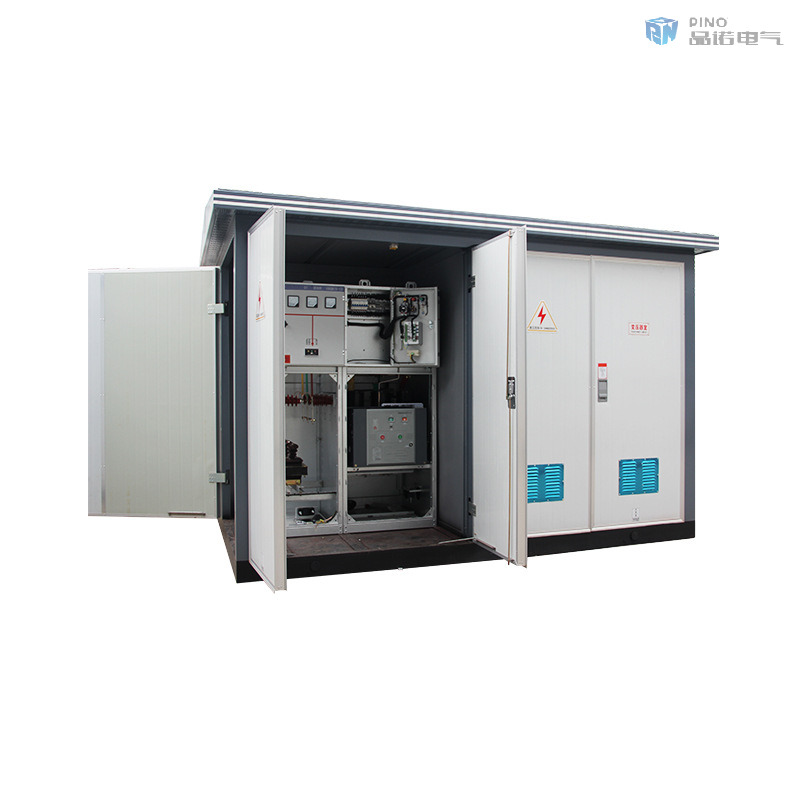
What exactly defines a structural modular enclosure? It goes far beyond a basic open-air equipment skid. These advanced units feature rigid structural steel framing designed for extreme physical durability. They provide fully enclosed, climate-controlled environments for sensitive electronics. This heavy-duty shell protects your critical assets from harsh weather, seismic activity, and physical intrusion. Manufacturers engineer the walls, flooring, and roof to meet strict deflection limits. This ensures the building remains perfectly rigid while suspended by a crane during final deployment.
Factory teams integrate vital support systems long before deployment. They install high-efficiency HVAC units to regulate internal temperatures meticulously. This prevents sensitive relays from overheating. Fire suppression and smoke detection systems are pre-plumbed, wired, and tested. Security access controls, emergency lighting, and auxiliary power systems are fully integrated into the chassis. You receive a complete, self-sustaining ecosystem rather than just an empty metal shell. This pre-integration removes the need for secondary trades to visit your site.
Electrical components require precise housing and intricate wiring. Inside prefabricated electrical substation buildings, engineers install medium-voltage switchgear, protection relays, and control panels at the factory. Technicians route cables, terminate connections, and test everything as a unified system. This controlled method ensures seamless communication between components. It eliminates the risk of moisture contaminating open switchgear during a messy field installation. The entire electrical lineup acts as one cohesive machine before it ever leaves the manufacturing floor.
Time is your most valuable resource in infrastructure development. Concurrent construction phases offer a massive timeline advantage. Civil engineers can grade your land and pour foundations on-site. Simultaneously, technicians fabricate and assemble the modules off-site in the factory. This parallel processing cuts overall project timelines dramatically. By the time your concrete foundation cures, the fully integrated building is already traveling down the highway. You transform a 12-month traditional build into a 6-month rapid deployment.
Factory Acceptance Testing (FAT) provides immense engineering value. You can test the entire integrated system in a clean, controlled facility. Engineers verify every mechanical connection, dielectric strength, and logic sequence. This rigorous quality assurance process guarantees plug-and-play functionality upon delivery. It eliminates the frantic, stressful troubleshooting usually required during field commissioning. If a relay configuration needs adjusting, technicians fix it immediately at a factory workstation, rather than in a muddy field during a rainstorm.
Raw material costs only tell a fraction of the story. You must evaluate the final, fixed installed cost. Factory builds drastically reduce expensive field labor hours. They also diminish the need for fencing, lighting, and security guards during long construction phases. Upfront fixed pricing from a manufacturer prevents surprise change orders. Most importantly, deploying your infrastructure faster means accelerated time-to-revenue for your operations. You start powering your processes months ahead of a traditional schedule.
Modern AI facilities consume massive amounts of power. Their rapid capacity expansion requirements are truly staggering. Facility managers cannot wait two years for traditional grid upgrades. For these hyper-scale operators, modular buildings are the default, mandatory choice. They bypass power bottlenecks quickly and reliably. By dropping a fully tested modular substation onto the data center campus, operators can energize new server clusters in weeks rather than years.
Wind and solar farms often occupy remote, harsh environments. Transporting traditional construction crews, housing them, and shipping raw materials to these isolated locations is cost-prohibitive. A pre-integrated solution solves this logistics nightmare perfectly. You simply ship the completed unit to the desert or mountain site. Once the crane lowers it onto the pad, utility workers connect the primary feeds and power it up. This strategy protects sensitive inverters from blowing sand during assembly.
Mining operations and heavy industrial plants expand in phases. They need electrical infrastructure that adapts to changing geographical needs. Modular units offer unique deploy-and-relocate capabilities. You can power a specific mining extraction shaft today. Five years from now, you can disconnect the building, load it onto a trailer, and move it to a new extraction zone. This mobility prevents you from abandoning expensive permanent structures when operations shift.
Shipping heavy, oversized loads involves complex physical realities. You must secure specialized road permits across multiple state or provincial lines. Logistics planners must calculate bridge weight limits meticulously. Detailed route surveys prevent expensive delays. If a module cannot clear a low overpass or navigate a tight roundabout, your project grinds to an immediate halt. You often need highway patrol escorts and specialized multi-axle trailers to move these massive structures safely.
Precise site engineering is absolutely critical for success. You cannot adjust a prefabricated steel building to fix a botched concrete foundation. The concrete pads must be perfectly leveled. They must be fully cured and completely ready upon the truck's arrival. Civil engineers must position anchor bolts exactly to the millimeter based on the manufacturer's templates. Misaligned bolts will ruin a seamless crane installation process and cause severe delays.
Modularity severely limits late-stage design changes. You cannot easily move a structural wall or relocate an HVAC duct once steel fabrication begins. Therefore, your electrical and structural engineering teams must finalize 100% of the design early in the project lifecycle. This requires rigorous upfront planning and stakeholder alignment. You must know your exact cable entry points and switchgear dimensions before signing the final manufacturing approvals.
Comparison of Construction Execution Realities
Project Phase | Traditional Site-Built Method | Modular Prefabrication Method |
|---|---|---|
Design Changes | Flexible during early construction, but causes delays. | Highly rigid; changes must be finalized before manufacturing. |
Site Logistics | Requires managing dozens of vendors, materials, and security. | Requires complex oversized load transport and route planning. |
Testing & QA | Done in the field, vulnerable to weather and dust. | Done in a clean factory environment via structured FAT. |
Foundation Work | Poured first, dictates the start of building erection. | Poured concurrently while the building is manufactured off-site. |
Can the vendor adapt standard enclosures to your specific footprint? You must assess their engineering flexibility carefully. Some project sites require extreme environmental ratings, like specialized coastal paint for salt-spray resistance. Others need compact, multi-story footprints to fit between existing factory structures. A strong manufacturing partner customizes the exterior shell without compromising the standardized internal quality of the electrical components.
You must verify key industry standards before selecting a partner. Ensure they hold the proper certifications to keep your site compliant and safe.
Ensure the enclosure meets specific NEMA ratings for extreme weather protection.
Confirm strict adherence to global IEC and IEEE electrical testing standards.
Check their ability to comply with localized municipal building codes and snow-load requirements.
Demand certified blast-rating capabilities if deploying the unit in hazardous petrochemical environments.
Evaluate vendors based on their holistic lifecycle management. Do they handle structural and electrical engineering in-house? Do they outsource the steel fabrication, or do they own the factory? Can they execute the final Site Acceptance Testing (SAT) alongside your utility provider? A true turnkey partner minimizes your execution risk. They take full responsibility from initial design concepts through to the final grid connection.
Modular infrastructure represents a fundamental shift in project delivery methods, rather than just a simple product swap. By trading field uncertainty for factory predictability, you gain massive advantages in scheduling, safety, and system reliability. When project timelines are aggressive and skilled labor is scarce, prefabrication is the most logical path forward.
Initiate feasibility studies early: Evaluate your site layout to determine if crane access and modular delivery are physically viable.
Map transport routes immediately: Engage logistics experts early to ensure no bridges or power lines block the delivery of your oversized modules.
Finalize engineering upfront: Lock in your electrical single-line diagrams before the factory cuts the first piece of structural steel.
Select a turnkey partner: Choose a vendor that handles both the structural shell fabrication and the internal electrical integration.
A: The lifespan of a modular structure easily equals or exceeds traditional builds. Manufacturers use heavy-gauge structural steel and apply industrial-grade, anti-corrosive coatings. These controlled factory conditions ensure superior weld quality compared to field welding. With routine maintenance, these robust enclosures easily last 30 to 40 years, matching the standard lifecycle of the internal electrical switchgear they protect.
A: Yes, you can expand these structures later. Engineers design many enclosures with removable end-walls or scalable bus duct connections. When capacity demands increase, you can dock an adjoining module directly to the existing structure. This modular scalability allows you to add switchgear lineups as needed, preventing you from overbuilding and overspending on day one.
A: Modularity often simplifies the local inspection process. Because the building undergoes rigorous factory inspections and testing, local municipal inspectors primarily focus on site work. They review foundation pours, site grading, and final grid tie-ins. The pre-approved, certified structural engineering of the enclosure usually helps bypass lengthy local building design reviews.


